
Usain Bolt’s Sprint Mechanics for Speed and Acceleration
Dec 14, 2025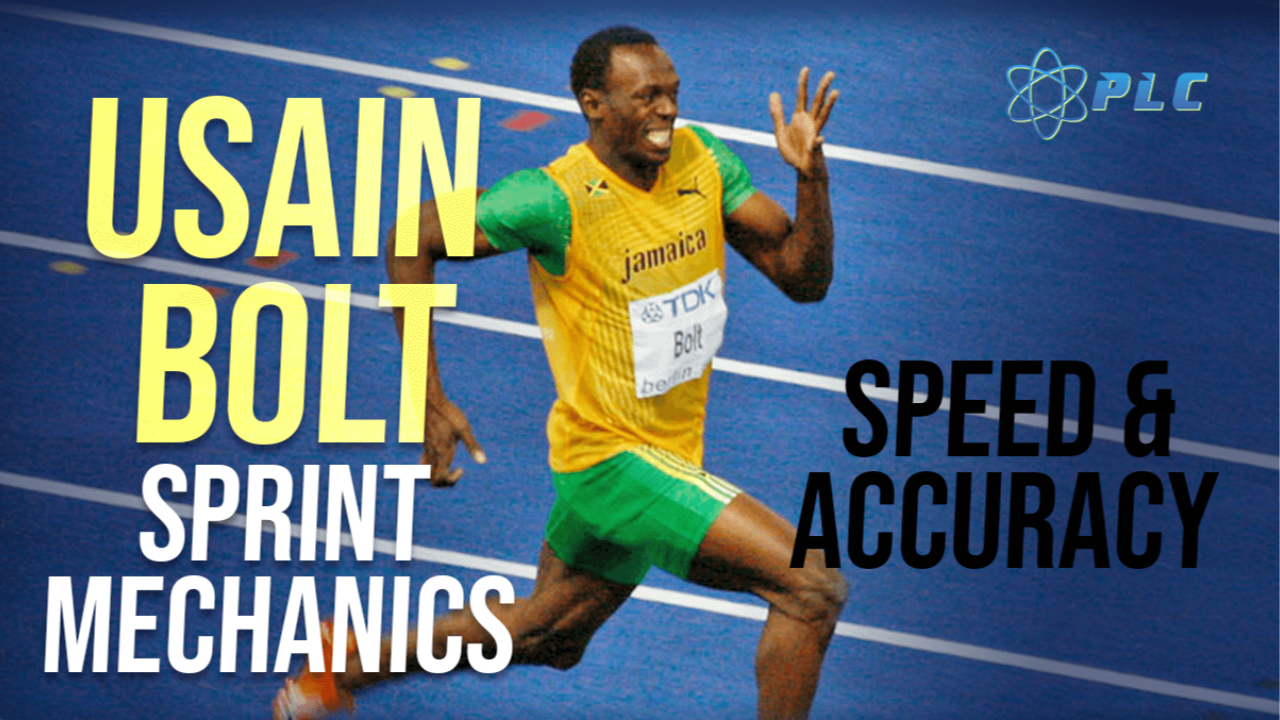
Introduction
Usain Bolt is universally recognized as the fastest human ever recorded, holding multiple world records and Olympic gold medals. But what exactly sets Bolt apart from other sprinters? This in-depth analysis breaks down the key biomechanical factors behind his extraordinary speed, focusing on his start, acceleration phase, and top-end velocity. Whether you’re an aspiring sprinter or an athlete looking to improve your speed, understanding these mechanics can help you take your performance to the next level.
 Usain Bolt at Beijing 2002 | Image Source
Understanding Usain Bolt’s Sprint Performance
The Significance of Bolt’s World Records
Bolt’s 9.58-second 100-meter world record is legendary. His race data reveals remarkable splits:
- Reaction time: 0.146 seconds
- First 10 meters: 1.89 seconds
- 20 to 30 meters: 0.90 seconds
- 60 to 70 meters: 0.81 seconds (his fastest segment)
These splits show an incredible combination of explosive starts, efficient acceleration, and sustained top speed, a rare trifecta that defines Bolt’s dominance on the track.
Force Production and Power Output
Estimates suggest Bolt generates approximately 1,000 pounds of force on his right leg and 955 pounds on his left during sprints. Such force generation is key to propelling him forward quickly and maintaining his incredible velocity.
The Start: Foundations of Explosive Speed
Body Position and Initial Movement
Bolt’s start is a perfect blend of power and control. Key features include:
- Hands rise simultaneously, providing balance and rhythm.
- Upper body and shoulders lift smoothly while hips extend forward, creating a powerful drive.
- The back foot’s heel remains behind the toe of the front foot, enabling effective weight transfer.
This poised setup allows Bolt to maximize ground force while minimizing wasted energy.
Triple Extension and Ankle Dorsiflexion
A crucial aspect of Bolt’s first step is achieving a triple extension (extension at the hip, knee, and ankle) combined with dorsiflexion of the ankle. This dorsiflexed ankle position allows him to control foot strike precisely, absorbing impact efficiently and preparing for a powerful push-off.
Arm Mechanics and Balance
Bolt’s arms play a pivotal role:
- Front elbow achieves significant height, aiding forward momentum.
- Arms swing with a large range of motion, balancing the body and driving hip movement.
- The pull-back phase of the arms correlates with effective front-side mechanics, enhancing stride efficiency.
Acceleration Phase: Building Momentum
Maintaining Horizontal Posture
Unlike many sprinters who become overly vertical too early, Bolt maintains a forward lean during his acceleration. This horizontal posture enables:
- Greater force application into the ground.
- Efficient transition from start to top speed.
Hip Adduction and Internal Rotation
Bolt exhibits controlled hip adduction (knees moving inward) and internal rotation during the early steps. This biomechanical strategy allows his feet to strike the ground under his center of mass, optimizing balance and propulsion.
External Rotation Upon Foot Strike
As his foot contacts the ground, the leg externally rotates, similar to a squatting position. This prepares the muscles for a strong push-off and stable landing, key to minimizing ground contact time.
Top-End Speed Mechanics: Sustaining Maximum Velocity and Speed Endurance
Quick Leg Recovery and Low Heel Drag
Bolt’s back leg recovery is characterized by:
- Low heel position close to the ground.
- Minimal vertical lift, allowing rapid repositioning.
This “low heel recovery” reduces wasted motion and increases step frequency.
Effective Foot Strike and Pull-Back
Bolt lands predominantly on the balls of his feet, with his toes dorsiflexed, enabling quick ground contact and rapid push-off. Importantly, he actively “pulls” his leg backward, engaging a kinetic chain from the foot through the calves, hamstrings, glutes, and lumbar muscles. This pulling motion is critical for:
- Accelerating leg turnover.
- Maintaining forward momentum.
This contradicts the common but flawed belief that sprinting is purely about leg extension; instead, active leg pull-back is essential.
Maintaining Spine Angle and Head Position
Throughout his sprint, Bolt keeps his spine relatively stable and spine angle consistent, avoiding excessive vertical oscillation. His head remains down and forward during acceleration, reducing unnecessary movement and preserving energy for forward drive.
The Importance of Patience in Speed Development
Building Speed Gradually
Bolt’s fastest split occurred between 60 and 70 meters, emphasizing that reaching top speed is a process. Many sprinters rush to hit their maximum speed too early (e.g., within 30 meters), which often limits overall performance.
Controlling Top Speed
Speed is not only about how fast you can go but how well you can control and sustain that velocity. Bolt’s smooth transition phases and excellent technique help him maintain form and speed for longer distances, a skill that distinguishes elite sprinters from the rest.
Creating a Training Plan for Sprint Success
Achieving sprint success starts with a well-designed training plan that balances intensity, variety, and recovery. Whether you’re aiming to improve your personal record, complete a half marathon, or simply run faster over your chosen running distance, your training plan should reflect your current fitness level and long-term goals.
Hill Training and Strength Exercises for Power
Hill training is a powerful tool for sprinters looking to boost speed endurance, leg strength, and overall running performance. By incorporating hill sprints into your weekly routine, you challenge your muscles with a hard effort that translates to a faster pace on flat ground. Find a hill that takes 30-60 seconds to climb and perform 4-6 repeats, focusing on driving your knees high, maintaining a strong core, and using good running form throughout.
In addition to hill training, strength exercises such as squats, lunges, and deadlifts are essential for building the power needed to sustain faster speeds over longer distances. These movements not only enhance leg strength but also improve running efficiency and help prevent overuse injuries. Don’t forget to include dynamic stretches and a thorough warm-up before each session to prepare your muscles and joints for high-intensity work.
By combining hill training, strength exercises, and proper technique, you’ll develop the explosive power and endurance necessary for peak running performance.
Staying Motivated and Focused
Maintaining motivation and focus is crucial for making progress in your sprint training. Set clear, achievable goals—like breaking your personal record or completing a set number of hill sprints—and celebrate each milestone along the way. If you experience setbacks, remember that every runner faces challenges; what matters is your commitment to keep moving forward.
Joining a running community or training with a partner can help you stay accountable and inspired. During workouts, concentrate on your running form and technique, making sure not to waste energy on unnecessary movements. Staying focused on your goals and training plan will help you run faster and more efficiently, turning small improvements into big differences over time.
With dedication and a positive mindset, you’ll be well on your way to achieving your sprinting ambitions.
Overcoming Challenges in Sprint Training
Every runner encounters obstacles on the path to sprint success, from overuse injuries to periods of low motivation. Common issues like shin splints or plantar fasciitis can arise, especially if you increase your training intensity too quickly or neglect proper rest. To avoid injury, make recovery a priority—use techniques like ice baths, compression gear, and foam rolling to support your body’s healing process.
If you do experience an injury, don’t lose sight of your goals. Adjust your training plan as needed, focus on proper rest, and stay committed to your recovery. Remember, setbacks are a normal part of any training journey. By staying focused, listening to your body, and practicing patience, you’ll overcome challenges and continue making progress toward your sprinting goals.
With the right approach and mindset, you can turn obstacles into opportunities for growth and come back stronger than ever.
Applying Bolt’s Mechanics to Your Training
Focus on the Start
- Practice triple extension with dorsiflexed ankles.
- Develop arm swing mechanics that drive hip movement.
- Work on explosive but controlled initial steps.
Develop Acceleration Technique
- Train to maintain a forward lean without becoming vertical too early.
- Enhance hip mobility to improve adduction and internal rotation control.
- Strengthen muscles involved in external leg rotation and extension.
Enhance Top Speed and Leg Recovery
- Incorporate drills for low heel recovery and quick toe-off.
- Emphasize active leg pull-back using hamstrings, glutes, and calves.
- Strengthen core and upper body to stabilize spine and support efficient sprinting posture.
Be Patient and Build Speed Over Distance
- Avoid rushing to top speed; allow acceleration to build naturally.
- Practice sustaining top speed through proper technique and conditioning.
- Monitor ground contact times and aim to minimize them for faster turnover.
Conclusion: Learn from the Greatest to Improve Your Speed
Usain Bolt’s sprinting success is not just talent—it is the result of precise biomechanics, relentless training, and understanding the subtleties of sprint mechanics. By dissecting his start, acceleration, and top-end speed phases, athletes can glean valuable lessons:
- Master your start with strong triple extension and dorsiflexion.
- Build acceleration patiently, maintaining forward lean and hip control.
- Focus on quick leg recovery and active pull-back at top speed.
- Prioritize technique and control over raw quickness alone.
Incorporating these principles can help sprinters and athletes across sports unlock new levels of speed and performance. Remember, while not everyone will break world records, improving these fundamentals boosts your chances of sprinting faster and more efficiently.
Frequently Asked Questions (FAQ)
Q: How important is ankle dorsiflexion in sprinting?
A: Very important. Dorsiflexion helps control foot strike and prepares the foot for a powerful push-off, reducing injury risk and improving speed.
Q: Can tall athletes sprint as fast as shorter sprinters?
A: Yes. With proper biomechanics and strength, tall sprinters like Usain Bolt prove that height can be an advantage when paired with efficient technique.
Q: Why is the pull-back phase crucial in sprinting?
A: The pull-back phase engages crucial muscles that help accelerate the leg rapidly, improve ground contact time, and enable landing under the center of mass for better propulsion.
Q: How can I improve my acceleration phase?
A: Focus on maintaining forward lean, driving knees upward with control, practicing hip mobility drills, and strengthening the muscles involved in hip extension and rotation.
Q: Is it better to reach top speed quickly or build it gradually?
A: Building speed gradually is more effective. Sprinting performance depends on how well you accelerate and sustain top speed, not just how fast you start.
Watch more on our masterclass below and discover more Usain Bolt facts!
By understanding and applying these principles from the fastest man alive, you can elevate your sprinting technique and unlock your full speed potential.
Stay connected with news and updates!
Join our mailing list to receive the latest news and updates from our team.
Don't worry, your information will not be shared.
We hate SPAM. We will never sell your information, for any reason.
